Showing posts with label Special Features. Show all posts

Sunday, 8 February 2015

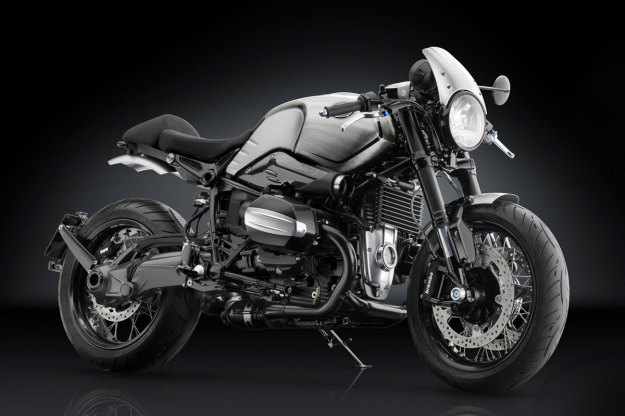
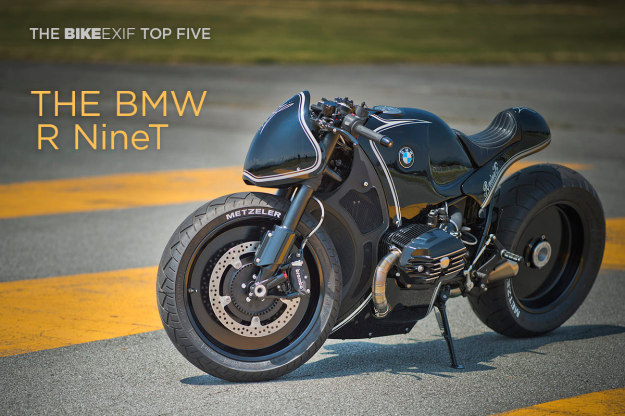
Top 5 BMW R Nine T customs

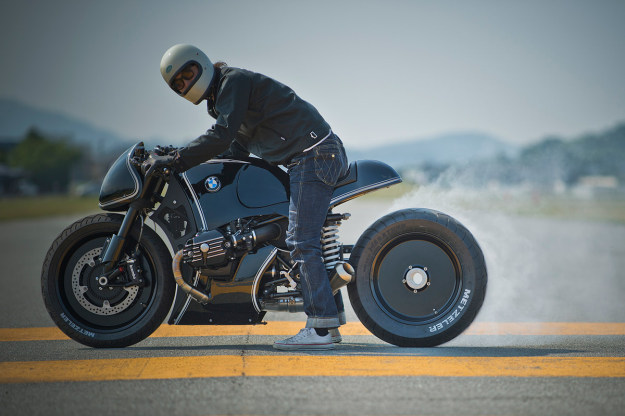
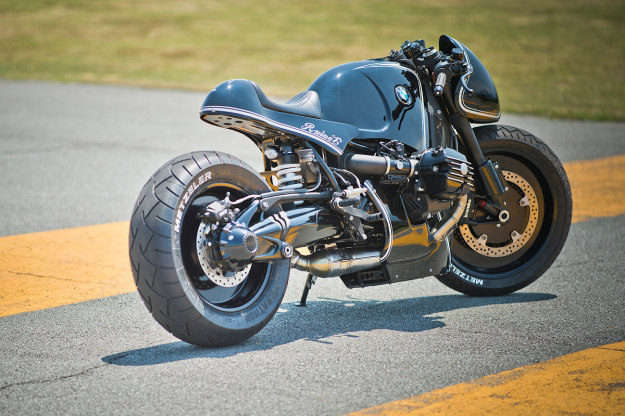
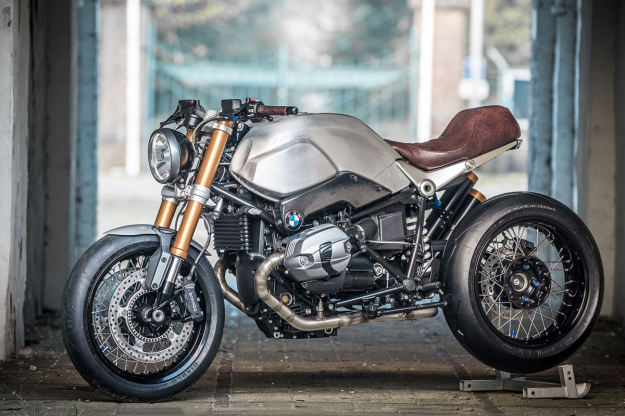
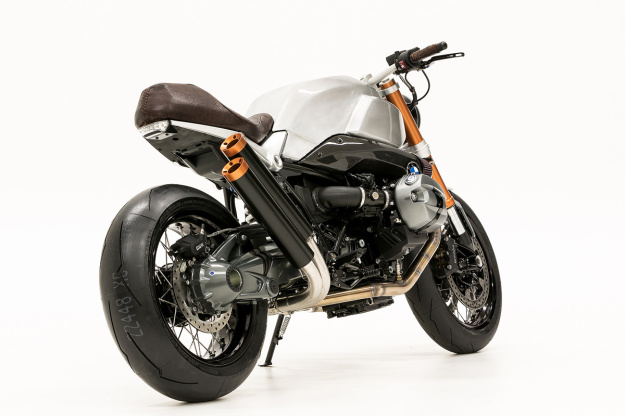
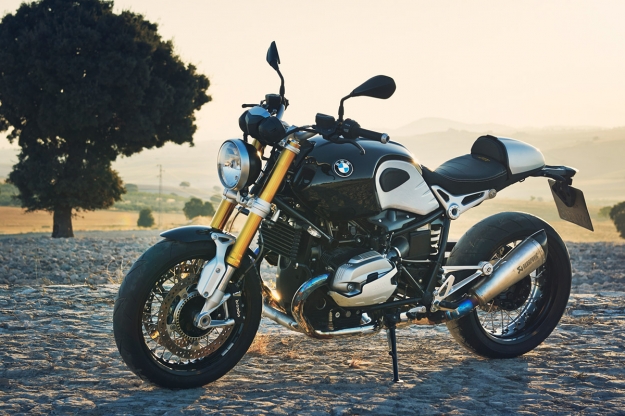
BMW's R nineT motorcycle: a smash hit with custom builders.

BMW came out swinging when they released the R nineT. Even before the bike went on sale, it was farmed out to some of the world’s top custom builders: a clear indication of BMW’s new-found love for the custom scene.

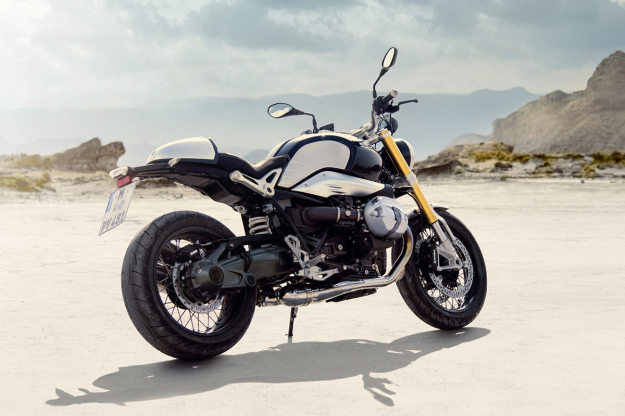
There’s a lot to love about the R nineT itself. It’s powered by the punchy 1200cc boxer motor and it’s kitted out with a hydraulic clutch, ABS brakes, beefy USD forks and twin Akropovic mufflers. So it’s an absolute blast to ride (we’re speaking from experience).

BMW's R nineT motorcycle: a smash hit with custom builders.
But it’s the R nineT’s looks that really set it apart: a stunning two-tone paint scheme and extremely minimalistic trim. It’s also a bit of a chameleon, with a configurable subframe and seat arrangement that allows users to swap between standard, café and bobber configurations.

Now that the dust has settled on the launch, we’re seeing more and more custom R nineTs coming through. Just last week we featured a stunning example by Texan shop Revival Cycles. Now we’ve rounded up another five that we just can’t take our eyes off.

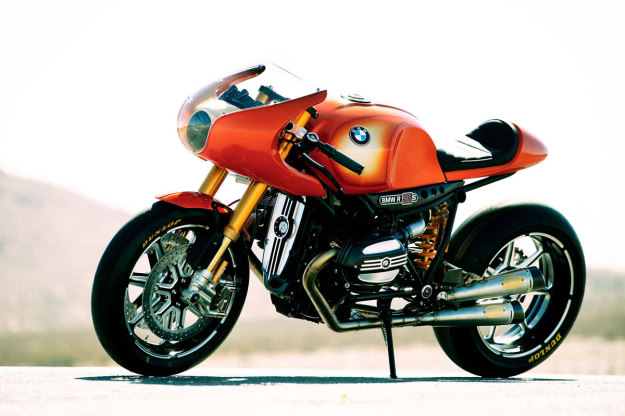
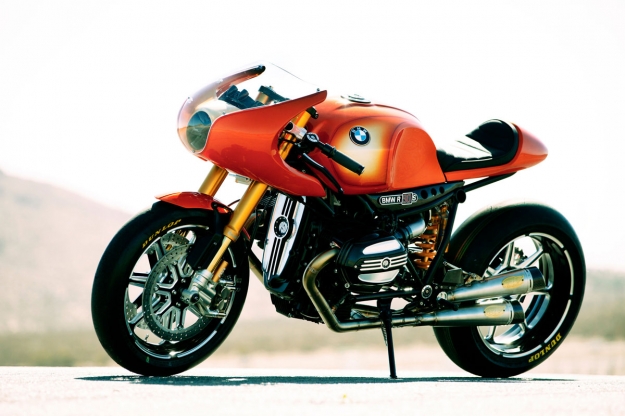
BMW Concept 90 motorcycle by Roland Sands.
Roland Sands Concept 90 Before BMW Motorrad officially launched the R nineT, they fired a warning shot: the Concept 90. Based on a pre-production R nineT, it was built by Roland Sands (in cahoots with BMW’s design team) as a homage to the iconic R 90 S.

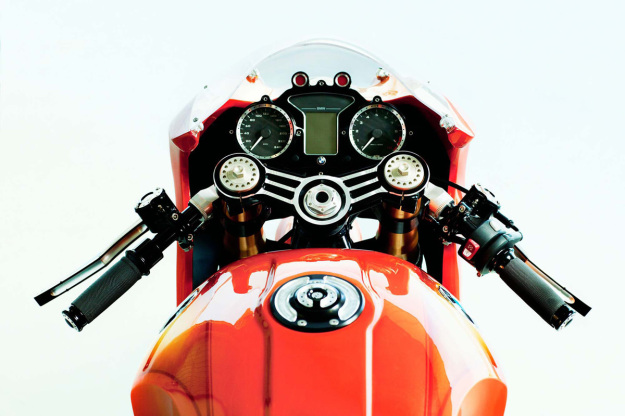
The R 90 S was a pretty big deal in its day—but the Concept 90’s more of an evolution than a reissue. The unmistakable Daytona Orange paint scheme is an obvious throwback, as are the bikini fairing and tail hump. These are a lot more streamlined though—to match the R nineT’s more modern physique and to give it a racy feel.

BMW Concept 90 motorcycle by Roland Sands.
Performance is improved thanks to Öhlins suspension, upgraded brakes, a unique air filter setup and dual Roland Sands Design mufflers. There’s also a stack of custom-made RSD parts—some of which will be available for purchase soon.

We’ve been lucky enough to see the Concept 90 in the flesh: to say that the level of detail and craftsmanship is impressive would be a gross understatement. So much so, that at 2013’s Wheels & Waves festival, it attracted more attention than all the other bikes put together.

Roland Sands Design | More Roland Sands bikes

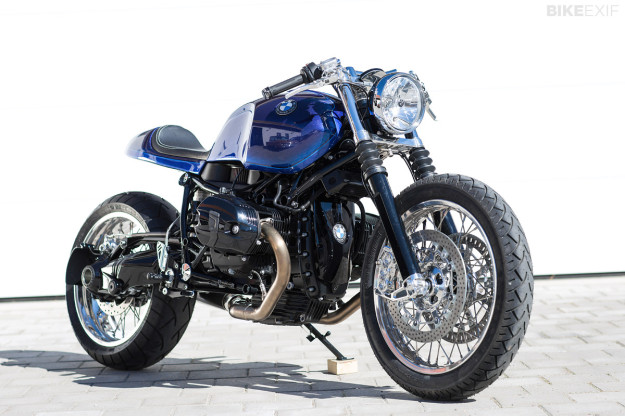
BMW R nineT customized by UCC.
Unique Custom Cycles’ Stockholm Syndrome Sweden’s UCC have been building custom motorcycles for almost 20 years. So, when BMW Motorrad wanted a bike to enter into the Norrtälje Custom Bike Show, they knew just who to turn to. In just 35 days, UCC created Stockholm Syndrome: the Concept 90’s naked, blue cousin.

They started by cutting and raking the frame, before building new forks and triple trees in collaboration with Tolle Engineering. Perka Nyström of Plebs Choppers supplied new insets.

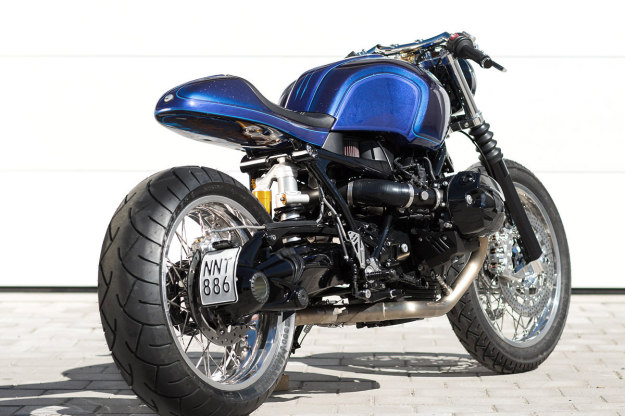
BMW R nineT customized by UCC.
The tank was trimmed—matched to a solo tail piece sitting on a new subframe. UCC also fabricated a new oil cooler and a stainless steel exhaust system, and hooked the latter up to a Burns muffler. Some tasty bits from ISR and Öhlins rounded off the package.

Stockholm Syndrome went on to take second place in the Custom Class of the Norrtälje show: no mean feat for a café-roadster in a competition dominated by choppers.

More images | Unique Custom Cycles

BMW R nineT customized by Cherry's Company.
Cherry’s Company Highway Fighter The Japanese custom scene has always marched to the beat of its own drum. This was made abundantly clear when BMW Motorrad handed the R nineT to four of Japan’s top builders to do their thing.

Go Takamine, Hideya Togashi and Shiro Nakajima all built excellent examples. But this provocative black number from Kaichiro Kurosu of Cherry’s Company stopped us dead in our tracks.

BMW R nineT customized by Cherry's Company.
Delightfully noir, Kurosu calls his vision “near future”. His hand-beaten aluminum bodywork is masterfully executed—complemented by a set of modified Custom Chrome RevTech Billet wheels (18” at the front and 16” at the rear). The stock forks have been lowered with custom internals to tweak the R nineT’s stance, and the subframe, top yokes, steering stem and foot controls are all custom.

We’re not sure what we love more: the skeletal mesh section between the tank and belly pan, or the subtle, hot-rod style pinstriping on the nose fairing and tail.

Custom Project Diary | Cherry’s Company website | High resolution gallery

BMW R nineT customized by Smokin' Motorcycles.
Smokin’ Motorcycles Elegant Bastard Based in Rotterdam, The Netherlands, Smokin’ Motorcycles are relatively fresh faces on the custom scene. This R nineT (their third build) was their entry into the BMW Soul Fuel Challenge—a competition put together by BigTwin Magazine and BMW Motorrad Netherlands.

Smokin’ describe it as “an elegant motorcycle with rough edges, made for the ride.”

BMW R nineT customized by Smokin' Motorcycles.
The most obvious addition is the hand-made aluminum tank—but the bike also features a number of CNC milled parts. For the subframe, Smokin’ 3D scanned the stock unit and designed their own using CAD software. They also created some carbon fiber bits: like the right hand side air duct cover, terminating in a K&N filter.

The new exhaust system is also custom-built, and flows up into twin copper-tipped mufflers. A sprinkling of Rizoma parts was selected to finish off the build, and the seat and grips were upholstered in African Antelope leather by Fred de la Bretoniere.

Smokin’ Motorcycles website | Photos by Mark Kamphuis

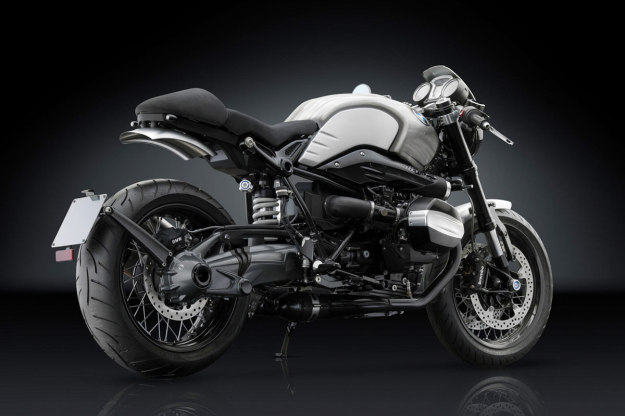
BMW R nineT customized by Rizoma.
Rizoma The Italian brand makes some of the most desirable parts on the market. And now they’ve turned their attention to the R nineT, releasing a full line of bolt-on bits.

The range includes everything from fenders to engine covers, rear-sets, handlebars, bar-end weights and levers. You can even buy plates to cover up the stock handlebar clamp holes, should you go the clip-on route. The small fly screen pictured is also on offer, along with various license plate mounting options and turn signals that can double up as a tail light. The full catalogue can be ogled on their site or downloaded as a PDF.

It’s the perfect option for the garage customizer that doesn’t necessarily want to “build” anything. So, if you have a R nineT in your garage (and a healthy bank balance), the result you see here is completely attainable.

BMW Motorrad USA R nineT product page | Wesley’s review of the R nineT | Top 5 BMW R Series: Part I, Part II

BMW R nineT customized by Rizoma.

Editorial: Authenticity

Authenticity, Harley-Davidson style.

A few days ago, motojournalist Jason Cormier published a hard-hitting critique of the current custom motorcycle scene. At 4,000 words it’s a long piece, but also a very interesting read. With Jason’s permission, we’re republishing it here.

The whole concept of authenticity (and what is or is not authentic) is one of those paradoxical topics that seems simultaneously important and utterly trivial. The term serves as an accusation/accolade directed at whatever fad du jour is grabbing the attention of the public, but it seems to be a product of our recent cultural aspirations.

The whole business of following our passions, aspiring to greatness, and generally expecting the best for ourselves, no matter how lazy or shiftless we are, is a recent development that has enveloped our culture.

To lack authenticity is to contrive against some notion of “true” passion—or worse, to debase those passionate pursuits with monetary concerns. To exhibit an idealized form of authenticity is to be in tune with your loves and desires without corrupting them with rationality or materialism. Upon reflection it’s all a bit ridiculous, but bear with me, I’m sure I have a point brewing here somewhere.

This societal push for everyone to live out his or her dreams (or forever live in despair because they failed to do so) is a recent development that doesn’t seem to have much precedent. Our highly networked, highly public culture places high value on success, the trappings of wealth, and some vague pursuit of happiness; our constant monitoring of each other’s progress inspires greed, jealousy and the sort of beating-the-Jones-into-submission dick-waving that would make our ancestors cringe.

And that’s what makes it seem all the more ridiculous—did our great-great grandparents aspire to pursue their dreams? Did they tell their children that someday they could be anything they wanted to be (but today they needed to pick rocks out of the soil)? Did bean farmers in Iowa sit on their porches and gaze wistfully into the sunset, wishing they could abandon their earthly responsibilities to pursue their “passion”?

Probably not. They farmed dirt like they had for generations, and pursued the only life they knew. Those who aimed higher would either make their fortune with luck and hard work, or get browbeaten back into submission for being so vain as to aim above their lot in life.

This pursuit of irrational desire has bred a multitude of curious trends. We live in a material culture that places high value on things, with some objects having more monetary and philosophical value than others based on their construction, performance and the ideas that inspired them. We have gone beyond the realm of mere functionality; now we judge objects by their moral and conceptual backgrounds.
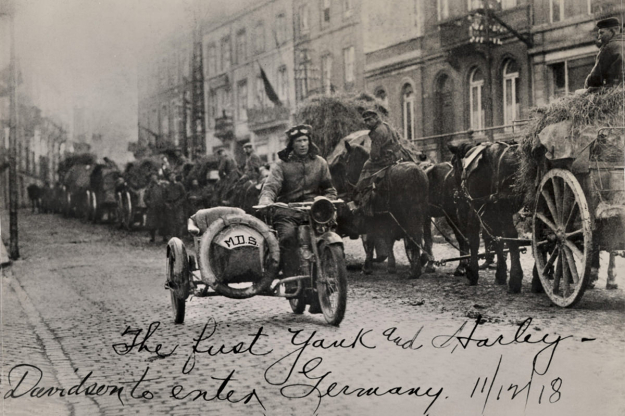
1918 Harley-Davidson motorcycle.
High value is placed on that which is honest and born of true workmanship (whatever that is)—be it coffee, clothes or motorcycles. We’ve come to romanticize the notion of honest labour, of some selfless pursuit of perfection in materialism crafted by scarred hands and inspired by hard-won experience. And in lieu of actually living this honest life, you can buy it—the products, the image, and the ideals are all up for grabs if you have the money and the poor sense to fall for the hype.

I’ll digress a bit and attempt to return to the core of this discussion, and what matters to me and my readers – how do these notions of authenticity impact on our modern motorcycle industry?

Motorcycling as a whole has seen a strange series of ups and downs over its short history, a series of failures and rebirths that have built a curious mythos that is as complex as it is contradictory. In Western society we’ve witnessed the transition of motorcycles from being cheap forms of transportation to status symbols and recreational items. They’ve flickered in and out of respectability repeatedly over the decades, building an image of grace tempered with a tinge of outlaw culture.

We reference our past and play dress up with the trappings of bygone groups, putting on pageants of leather and chrome and noise that are as much the product of marketing as they are an a contrived expression of “individuality”. We conveniently ignore the elements of our history we dislike, and parade around in references to the bits we chose to glorify. Our culture is a constantly evolving pastiche of disparate elements stitched together into some virtually incomprehensible mess that is scarcely decipherable to those outside our world (and quite a few of us inside it).

In cultural terms we’ve appropriated elements of the past without understanding them, building monuments to nostalgia and tradition without substance. We have trouble moving forward as a result. Conservatism reigns and we distrust the new. We stick to the formulas and keep building bicycles with engines strapped to them without accepting meaningful progress. At the end of the day image trumps engineering.

It isn’t all bad. There is something to be said for machines that channel a genuine spirit. As much as I may disparage the paint shaker-cum-transportation rolling out of the Milwaukee, I have a begrudging respect for their single-minded pursuit of an ideal. Harley-Davidson is, all marketing aside, the only authentic cruiser. It has an unbroken lineage that has survived depressions, recessions, wars, and image problems, a purity of antiquated design that respects its heritage—aberrations like the V-Rod (below) and Street 500/750 aside.
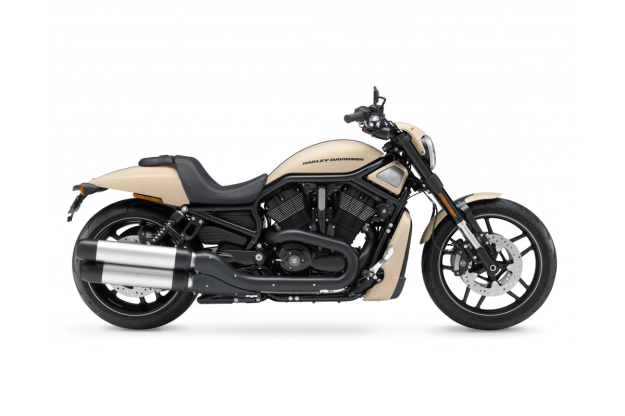
The Harley-Davidson V-Rod: authentic, or not?
The company can draw a nearly unbroken line from the present to its origins, and its products exhibit the hallmarks of the company’s past in a way that somehow doesn’t fall completely into the trap of creaky nostalgia. If we ignore the brash and contrived commercialism and zero in on the machines themselves, there truly is no substitute for a Harley. To attempt to copy a Harley is to commit the ultimate sin: to build something that is at its core a sham, a shameless knockoff that exhibits all the elements of the original with none of the heritage or spirit intact.

The Japanese marques are notorious for this. They analyse, copy, and conquer. The product may be superior in rational terms of performance, value and reliability, but it has no cultural value. It is an attempt to lure sales away from an established niche, to build a by-the-numbers facsimile. It is not authentic.

The Japanese are at their best when they are given the freedom to establish a new category, to build something distinct and advanced that doesn’t reference the competition. Modern sport bikes and standards owe their existence to the arms race instigated by the Japanese in the 1970s and 1980s that propelled design and performance forward at a remarkable pace. We should celebrate the birth of the superbike and the refinement of the modern motorcycle brought on by the strength of Japanese engineering, not the oil-tight copies of British twins and goofy Harley clones that cluttered showrooms for decades.
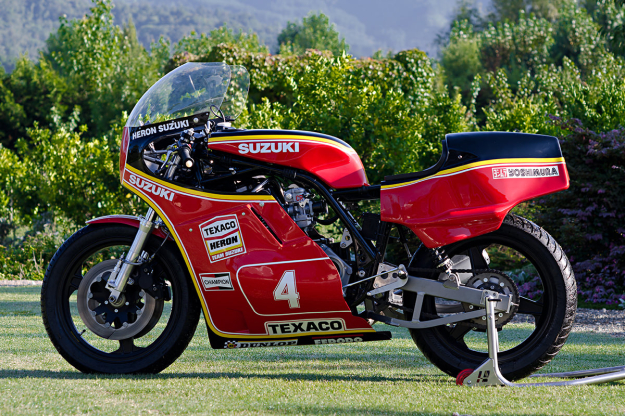
Crosby Suzuki: 1980s racebikes saw the Japanese at their best.
There is a paradox in there somewhere, or perhaps a trap that can easily lure in the clueless followers of fashion. We place value on that which is true and pure, but which upholds an outdated standard, and we end up sitting in place and stagnating. Laziness is not authentic. Neither is grimly hanging on to past glories without looking to the future. There is a fine line between honouring your heritage and clinging to old successes.

I’m as much as a sucker for the idealized, Peter Egan-esque notion of the bygone purity of the old as anyone else. There is an appeal to the image of sitting in the corner of the garage, swigging a dark beer and gazing upon some antiquated machine that is visibly hewn from metal by human hands as it plinks itself cool following a hard day’s ride. There is a spirit in these old barges that comes through with every ride, a personality that oozes out and puddles on the concrete of the garage floor along with so much straight-weight oil.

The trick is to appreciate this old world character without remaining a slave to it. Old machines will always be there; there is no need to recreate them. And most of those old machines were never harking back to some past ideal—they were products of forward-thinking designers, and were contemporary in their design and performance when they were current. What compels us to build homages to the past, when the subjects of those homages were the result of looking to the future?

There is also the problem of missing the point of those old cafe racers and stripped down bobbers. They were products of purpose. Their aesthetics were a result of the desire for more performance, less weight, and simplification. Their builders were not deliberately trying to channel any particular “look”: that came naturally from the pursuit of performance.

The modern cafe racer is merely a pretender, an attempt to replicate the appearance of this purity of construction without the substance. Yes, I’m deliberately drawing a parallel to the soulless Japanese copies of Harleys. That being said, there is a place for deliberately hack-n-slash “engineering”. It should not be presented in overwrought, high-minded terms cooked up by arts degree arrogance, attempting to channel some nonexistent spirit of rebellion (by doing the same thing everyone else is doing). They should be fun, self-deprecating romps like the Dirtbag Challenge.

I would argue that the British lost the plot after the collapse of their motorcycle industry. Norton was able to shamble along and renew itself with a series of remarkable rotary powered machines for a brief but interesting period, but all the other storied marques were obliterated following the arrival of the Japanese conquerors, despite a few admirable attempts to modernize right before the end.

While Harley was able to cash in on its legacy early on, and sustain itself through the Eastern onslaught and AMF bungling, the British saw their industry crushed and buried before a revival could take place. John Bloor’s resurrection of Triumph has been an undeniable success, but it has earned that success through bastardization of the company’s legacy. The 1990s were an interesting period where the company moved forward with a series of unique and charming triples and fours (1990 Daytona 750 shown below). Then they shat out the Bonneville repop in 2001.
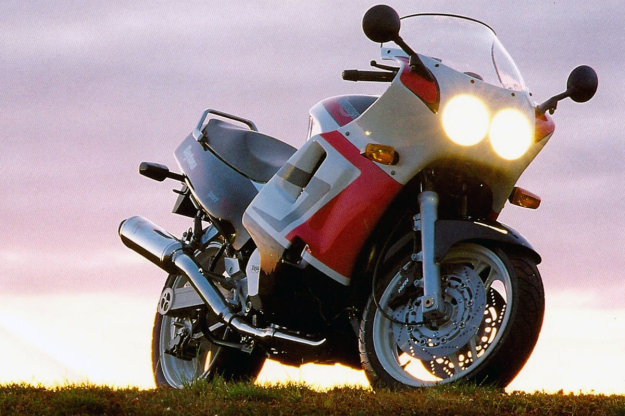
1990 Triumph Daytona 750
History had come full circle—the Japanese had beaten the competition by building soulless copies of British machines, and now the British had copied the Japanese by building a soulless homage to their own past. Union Jack decals distracted buyers from the “Made in Thailand” and “Made in India” stamps on components. The “new” Bonnie was (is) as British as Tom Kha Gai. Reliable and plodding, with boring performance and wobbly roadholding, it was a far cry from the fine handling and snarling engines that propelled Brit iron into the hearts of riders in the 1950s and 60s. But the facsimile was good enough at 20 paces to lure image-conscious buyers into the fold, by pandering to their nostalgia without offering any real substance. It may well have been a Kawasaki W650, a bike that arguably recreated the spirit of the original better than the new Bonnie ever did.
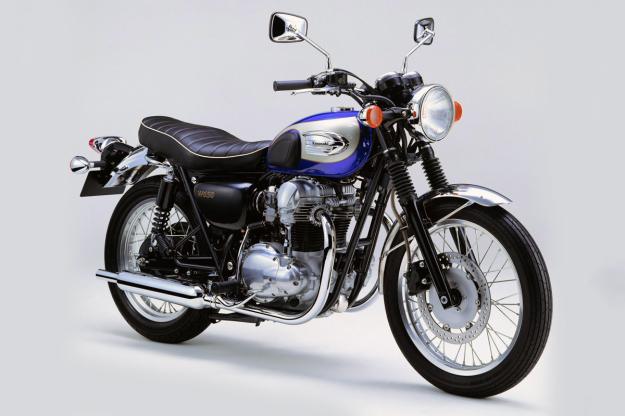
The Kawasaki W650: more 'authentic' than the current Triumph Bonneville?
The Bonneville became the prototypical nouveau classique motorcycle, a runaway success that spawned a series of equally uninspired rehashes from other marques (see also: Moto Guzzi V7, Honda CB1100, or any other machine that excuses lazy design and mediocre performance by appealing to our limitless capacity for nostalgia).

The resulting me-too hopping on the nostalgia bandwagon has done irreparable harm to modern motorcycle design. Where we once looked starry-eyed into the future aboard our sleek pastel-coloured rockets, we now look wistfully upon a past that never was while straddling wheezy appeals to the sentiments of baby boomers and their self-entitled hipster brethren.

In the process you end up with weird compromises, like the new BMW R Nine T abandoning the clever Telelever front fork in favour of a non-adjustable conventional fork to make “customization” easier. No, it wasn’t to save costs and glean some extra margin, it was to give 1% of buyers the opportunity to swap in some better suspension components they will never come close to making use of. Accommodating the whims of fickle buyers forces a step backwards.

Which allows me to segway neatly to my next target:

Our current industry has managed to combine the wistful longings of senile buyers, the muddled self-images of materialistic self-entitled brats, and the myth of honest labour into a cocktail that has given birth to the second coming of the café racer. Every wrench-spinning hack and their grandma has taken to the shed to build a cobbled together monstrosity as the custom scene has exploded into an orgy of candy-flaked, header-wrapped, Firestone-tired homages to … who knows what, they were too busy selling T-shirts and moustache wax to decide.

We have appropriated elements of the past and given them the glossy sheen of branding and rampant materialism, thereby abandoning any hope of contributing something meaningful to our culture. We will never exhibit that effortless cool of our heroes because we are trying too hard, and trying hard to make a buck in the process. Anyone who dares summon the spirit of McQueen (or Brando, or Marvin, or Eastwood, or Newman, or any other grizzled American male celebrity) in their marketing should be avoided at all costs. Beware the Steve McQueen/David Hasselhoff Conundrum.

That’s not to say that numbskulls slapping together deathtraps in their backyards is a bad thing. As long as young men and women have had hacksaws and cheap Mastercraft tools at their disposal, they’ve been butchering two- and four-wheeled devices to their perverted liking. Hot rod culture is alive and well, despite the arrival of the Prius and the NC700, and the naïve tinkering of our youth should be celebrated and encouraged—no matter how ugly it gets.
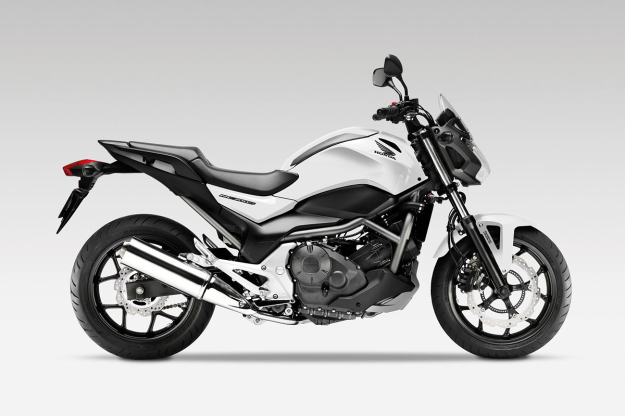
Progress: the 2012 Honda NC700S.
It should not, however, become commercialized to the point of ridiculousness. That is the difference between the authentic custom and the contrived machinations of businesses masquerading as honest builders. If they are churning out overpriced machines while selling made-in-China bolt on parts, and overpriced apparel with explicit references to Steve McQueen, they are not worthy of our praise. Save your accolades for the person with blackened, calloused hands who lives in poverty, funnelling all their meagre funds into their projects. You likely won’t hear about those people in the media, because they generally neglect to hire publicists or submit their work to Bike EXIF.

That’s the unfortunate and largely untenable ideal we have built, that of the passionate builder plying their trade free of corruption by monetary concerns. The myth of honest labour has merged with the image of the starving artist. The truth is that the most notable visionaries usually toil in obscurity, and always will. Their potential will always be limited by their lack of funds and their impact will be blunted by their lack of exposure. Noble though their plight might be in an idealistic sense, they can rarely achieve greatness or improve our culture if they are working in anonymity with limited means.

A select few rise to the top and get the breaks that allow them to soar, but most will suffer Ramen noodles and cheap beer while they skin their knuckles on their latest creation. It is a romantic image, but not a pleasant one to live through.

I once liked the whole aesthetic and do-it-yourself mentality that surrounded the rebirth of the café racer—and its American cousin, the chopper, which is equally a victim of a series of deaths and renewals that have tarnished the spirit of the original concept.

I became disillusioned when I visited the “Ace Café Corner” at the Barber Vintage Festival in October 2013. I paid extra to gain entry (which should have been my first sign of trouble) into what promised to be a cornucopia of expressive custom machines and a gen-u-ine recreation of the fabled Ace Café. What I got was a bunch of similarly-butchered Honda CBs with gaudy paint jobs and a concession tent that was identical to the dozen other food trucks that dotted the grounds, except this one served overpriced beer in addition to the cardboard pucks they passed off as burgers.

Various businesses plied their cheap wares in this “private” area, with everything from Chinese rearsets to coffee mugs on offer to the crowds of bearded, be-flannelled millennials. It was pathetic and disheartening. Bar a few original machines and an entirely out-of-place display of original Brough-Superiors, the whole scene left me cold and feeling cheated out of my admission fee. I had felt the cafe-racer image had jumped the shark some time prior, but seeing this pathetic display made me realize I truly disliked where our once vibrant custom scene was heading.
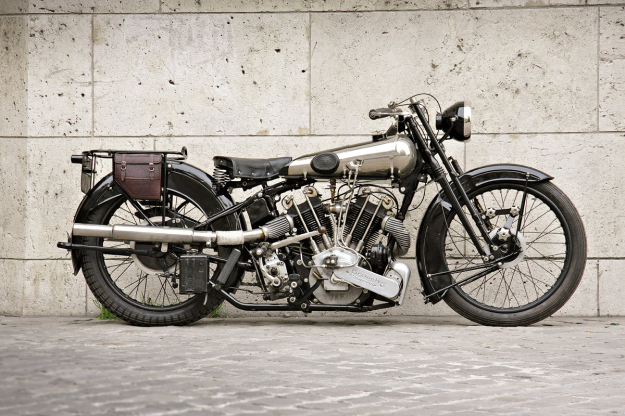
Authentic: the Brough-Superior motorcycle.
In my mind, true authenticity is born of a purity of purpose and design. The most notable machines are those that execute an idea with minimal compromise. They are pursuits of a focussed goal, of a certain truth. They are unapologetic. In terms of mass-produced machines, the Italians have made their mark building beautiful and uncompromised tributes to mechanical art, and that’s why I continue to ride and lust after Italian machines against all good sense. If I could only ride Bimotas for the rest of my life, I’d die a happy man.
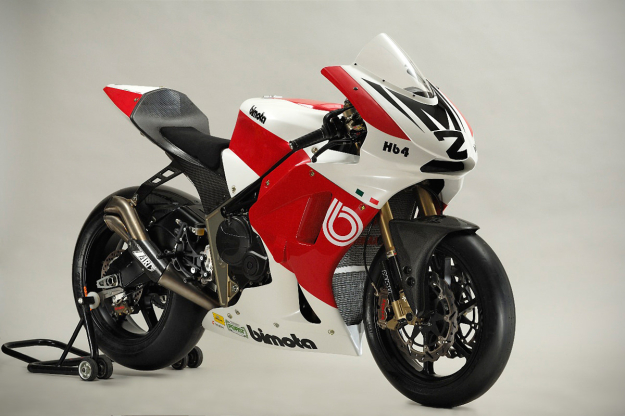
Bimota HB4
If I wanted something boring, comfortable, and easy to ride in traffic, I’d buy a scooter—or literally anything other than a focussed machine that makes no excuses for its performance. If someone hops on a lithe, visceral monument to man’s hubris and proceeds to nasally complains about how hard the seat is, or the lack of fuel capacity, or how the gearing is tall for stop and go traffic, they need to be immediately barred from ever riding anything more exciting than a Burgman.

The most egregious offenders to our sense of authenticity, wobbly café hoppers aside, are those that are borne of compromise and design by committee. Elements are dumbed down to suit cost-cutting, the bullying of environmental agencies, and the fickle demands of mouth-breathing consumers who are too busy looking for places to bolt a cupholder to notice how perfectly shaped the subframe support is.

More recently the concerns of liability issues in the North American market has driven many manufacturers to abandon anything remotely novel for fear of some dolt tipping over in a parking lot and then suing the company because they didn’t explicitly inform him via orange warning labels, audible alarms, and flashing lights that he shouldn’t ride with the sidestand deployed.

This exposes the core problem with our industry—we rely too much on the opinions of ill-informed potential buyers who are happy to disparage anything new and unusual. We are constantly forced to look backwards, to accommodate the whims of customers who refuse to accept anything unfamiliar. The classic retort of “I wouldn’t buy that” echoes loudly whenever something unusual is presented to the public, despite any attempts to demonstrate that those whiners were never the intended buyer (or that they wouldn’t have the opportunity to buy it even if they wanted to). People forget that the world doesn’t revolve around their whims. They don’t realize that their opinions limit progress, and that not liking something doesn’t lessen its value or its impact on the world.

The most notable projects outside of mass production are those built by the geniuses, tinkerers and cranks who dare to reject the norms and traditions of our otherwise conservative industry. These are the machines that often shock and inspire but are rarely well known outside of a few circles of discussion.

James Parker might be one of the best known designers of weird and wonderful alternatives given his infamous association with Yamaha and the GTS1000, and JT Nesbitt continues to buck convention in the most beautifully subversive manner from his workshop in New Orleans, but for every well-known odd bike designer there are a dozen unknown visionaries toiling away beneath the public’s radar—people like Tony Foale, Ian Drysdale, and Julian Farnam to name a few.
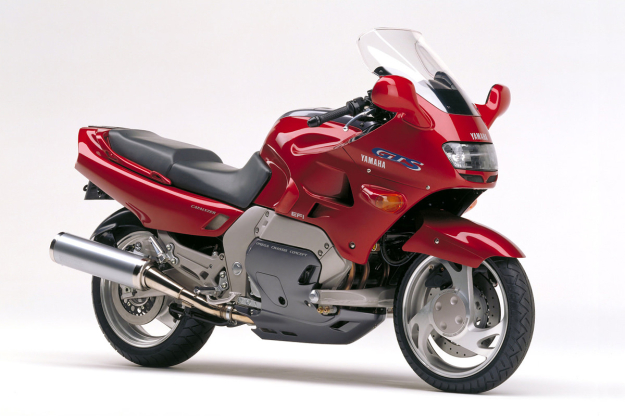
James Parker's radical Yamaha GTS1000 motorcycle.
They produce the best kinds of motorcycles: bikes that draw the ire of the shortsighted individuals weaned on boring appliances. If a machine is radical enough to inflame and enrage the conservative tendencies of all the yokels who gaze upon it, you know you are doing something right.

The commercialization of racing and pushing the cost of entry into the stratosphere has contributed to this relegation of innovation to backyard tinkerers. No works team is willing to bet the farm on some quote-unquote “unproven” technology, and sanctioning bodies would be waiting in the wings to ban any progress if a development proves advantageous. A few small teams bravely try to do something different but are limited by their modest means and their lack of support. The era of the privateer racer/mechanic building and racing his own machine (and remaining competitive) is long gone. Racing is so expensive, so complicated, and so heavily regulated that the individual scarcely has any hope of contributing any meaningful technological progress to the sport.

Nevermind that entire subsets of the industry have grown to accommodate the status quo. A good example is tires. Builders who have attempted to race with alternative front suspension designs have discovered that they are severely limited by tire performance—by separating braking, suspension and steering forces (which are typically muddled together by the action of telescopic forks) you reduce stress and friction on the tire, which leads to less grip because the tire can never maintain a sufficient temperature to perform properly.

Tires are designed with telescopic forks in mind, and there is nothing out there that will exploit the potential of a forkless front end. This leads to exasperated ideas of internally heating the tires, or directing exhaust heat towards the tread, or anything that will allow a forkless suspension to perform properly in racing. Accommodating the compromises inherent in motorcycle design leads to a vicious circle that sustains those compromises.
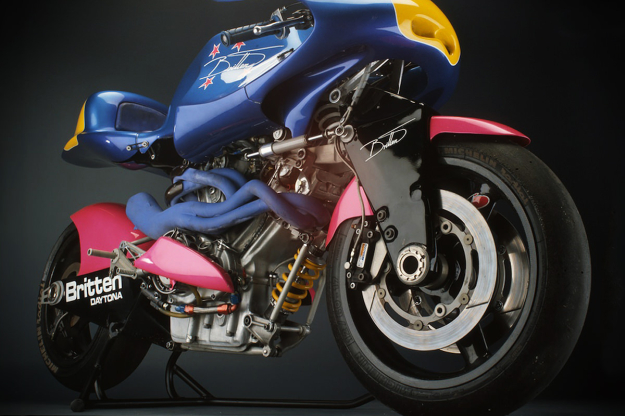
The radical suspension of the Britten V1000 motorcycle
They say racing improves the breed, so long as the breed is backed by billions of dollars and doesn’t deviate too far from the formula laid out in the rulebook.

Several designers I’ve spoken to lament that the problem of rampant conservatism doesn’t seem to have the same hold on the automotive industry as it does in the motorcycling world. In automobile design and engineering, progress seems more rapid, and radical ideas are often celebrated rather than viewed with all-damning skepticism.

Engineering solutions to problems are more natural—few in the automotive realm would accept the compromises of a telescopic fork when a better system could easily be designed. There could be many factors at play. Some think that the hidden nature of much of the engineering allows more experimentation—nobody will complain about how a suspension arm doesn’t look right when it is shrouded in bodywork. It might be also due to the financial aspects—a top tier car is aimed at an elite few who expect perfection, while even the most expensive motorcycles are still within the grasp of the upper middle class who seem to be far more fickle in their desires (and always willing to make unfair comparisons to cheaper mass-produced machines).

Time to digress again. I’ve meandered away from the original point of this editorial. Where does this all play into authenticity and passion? Does it really fucking matter? The problem with our industry as a whole is that we have become too preoccupied with defining what is and isn’t worthy of our attention.

In the meantime we’ve lost sight of the innovation that’s been brewing right beneath our noses. No, not those hipster dipshits wearing bubble visors and concocting new and creative ways to cut up their subframes. They are a mere distraction, a trend/fad that has been latched upon by the media and profiteers looking to cash in on what should otherwise be a pursuit of progress tempered with passion. You won’t find meaning in half-baked tributes to Steve McQueen or glossy photoshoots of models failing to look rugged in the saddle of some rolling throwback to a past that never existed.

True authenticity, in my mind, is the quest for purity in design, and unchecked innovation in the face of daunting conservatism. The people who should be conquering this industry are working in isolation and anonymity. It’s a damned shame that you’ve likely heard about Wrenchmonkees or Classified Moto but don’t know who Tony Foale is.

Of course I’m being harsh. I should probably avoid wholesale categorizations and unchecked disdain, but in general the priorities of our current motorcycle industry have left me frustrated. The man/woman in a shed building a bike has tremendous value to our culture, no matter how contrived their inspiration might be. They deserve praise and don’t deserve to be caught in the tides of fickle fads or transparent marketing. If they keep hacking and chopping, they might someday find the inspiration that will carry them toward building a meaningful contribution to our sport. Or they might keep cobbling together noisy deathtraps ad nauseum.

Who cares? It doesn’t make a difference. My hyperbolic opinions shouldn’t stand in the way of your innovation/butchering, just as the vocalizations of a slack-jawed consumer base shouldn’t stand in the way of progress in our industry.

As they say, “The views expressed by this author do not necessarily reflect those of Bike EXIF.” What’s your take?
Paul d’Orléans: Instafamous, Instabroke

Instafamous, Instabroke: how custom motorcycle builders make money (or not).
Moto-journalist Paul d’Orléans writes for the magazine Classic Bike Guide, and stirred up the hornets’ nest with this recent column. It’s a perceptive and thought-provoking commentary on today’s custom motorcycle scene.

I’ve been mucking around with old motorcycles since the 1980s, and like many, financed my bike habit via the sport of Arbitrage. That is, turning a profit on a bike after giving it some love.

It wasn’t an income; the only people living off the motorcycle game were (impoverished) moto-journalists and employees of legitimate dealerships. I knew lots of fellows, and a few ladies, who spent all their time repairing and modifying bikes, and none aspired to be anything but a garagiste. At the time, Von Dutch lived in a trailer, Ed Roth had long-ago lost his Revell contract, and only bands sold t-shirts.

It never occurred to us that someday we’d be aglow with some sort of notoriety. But ‘some sort’ is now within the purview of every human on the planet, via the joys of InstaFame.

A downloadable phone trick has the power to make us globally recognizable in weeks. Via the savvy curation of images, we trigger a mutual oxytocin drip in our fans and ourselves, liking and being liked, tapping away like starving lab monkeys, who’ve chosen the button for ‘attention’ over the one for ‘food’.

It’s fame, man, to the hungry end, and maybe even bigger when you’re dead; is that the ghost of TuPac or Indian Larry I hear laughing over posthumous sales? Don’t think I’m judging; I owe the mysterious gods of the Internet a debt of gratitude for my own lifestyle; let’s just hope I don’t owe them my soul.

Instafamous, Instabroke: how custom motorcycle builders make money (or not).
The shimmering dust of glamour has always coated parts of the motorcycle scene, and right now it’s falling on handsome, bearded guys wearing heritage work clothing and riding ’69-clone choppers or knobby-tyred customs, or girls doing seat-top acrobatics aboard same.

The original meaning of ‘glamour’ was the art of enchantment, a spell-caster’s ability to create an illusion around a person, place, or thing. And while the packs of self-paparazzing blogo-grammers crowding custom bike events are indeed beautiful and achingly cool, I fear our glamour is a spell cast in the mirror.

A mix of hopes and pleasures motivate today’s custom motorcycle builders; the joy of creativity mingled with glow of Web attention, and now there’s an established recipe for making a ‘cool’ bike, tested via the comments section on a hundred moto-blogs.

It’s easy to mistake the whoosh of online chatter for a wind to fill your sails, and a virtual wind is exactly that, while selling garage-altered metal to strangers has always been difficult. Savvy shops sell logo’d up clothing and calendars and keyfobs, scattering brand stickers in an Autumn of moto-foliage… but even such sales will only pay the bills, not the salary of a desperately-needed employee – or your own.

There are two ways to profit in business; large sales volumes with small profit margins, or high-end retail, and the successful moto-businesses sell the tanks and levers and rearsets the Wannabes need for an InstaFamous custom.

At the rich end of the spectrum, the market for hundred grand choppers evaporated in 2008, and I know exactly one builder who’s sold an art-gallery motorcycle for big bucks. Every other shop, then, is in competition for a limited audience, even if it seems at times that ‘everyone’ thinks we’re cool and ‘everyone’ wants your bikes…but is that the magic mirror?

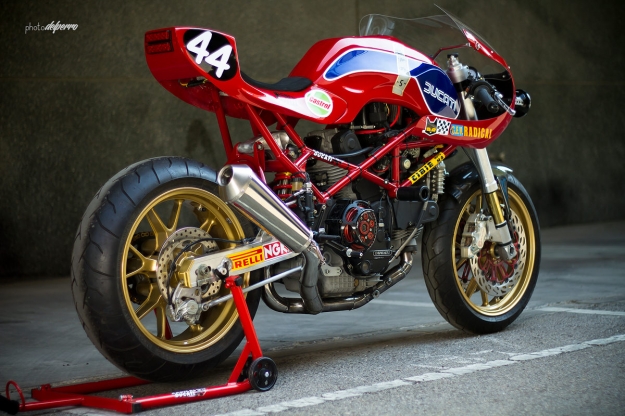
Ducati 749 by Radical Ducati
The first signs of iCustom casualties have recently appeared even in the luminous portal of Bike EXIF; shops going belly up, euphemistically ‘starting other projects’, i.e., jobs which pay. It hasn’t exactly been a Gold Rush (that’s happening in the App-creation world itself), and I know young bike builders don’t expect to get rich.

Still, it seems the business of pushing aesthetic boundaries with a motorcycle is best trod with a trust fund springing your step, or proceeding with deep humility and little expectation of worldly increase; the hackneyed rule for artists.

I’ve spoken with genius motorcycle builders whose controversial but gloriously innovative customs have netted them almost zero sales. A ‘like’ isn’t a dollar. But then again, as they slowly go broke or accustomed to reduced circumstances, the refrain is ‘there’s nothing I’d rather be doing’.

The coolest bike boom since the 1970s has kids buzzing like bees at Wheels & Waves, DirtQuake, and Born Free, and featured in popular books like the ‘The Ride’, to which I contributed. Riding bikes while young, beautiful and creative is a heady cocktail, as is the glamour of InstaFame.

But let’s not confuse the rain of electrons, following our every move, for a rain of cash. Because in the end, bikes are just motorcycles, but business is business.

Reprinted with kind permission of Classic Bike Guide. Radical Ducati image by del Perro. Paul d’Orléans runs The Vintagent website.

Top 5 2-stroke motorcycles

The Top 5 2-stroke motorcycles

There’s nothing quite like the smell of two-stroke oil. Or the sound of a swarm of two-strokes hurtling down the track at full tilt. Then there’s that power band—a trait that earned some larger-capacity bikes the title of ‘widow maker’.

Whatever the reason, there’s a certain romanticism associated with two-stroke engines. They’ve powered some of the most legendary motorcycles of all time, dominating track and off-road racing. I’ll never forget the time my dad took me to Kyalami in ’92 to watch the likes of Wayne Rainey, Kevin Schwantz and Mick Doohan duke it out. (John Kocinski ended up winning that race.)

Sadly, modern emissions laws have seen a drastic decline in the use of two-strokes. There are ways to make them compliant but, as Kevin Cameron explains in this piece for Cycle World, few manufacturers are willing to invest in the R&D required. So most two-stroke engines are now found in scooters and dirt bikes.

So it was time we asked the question: is a vintage two-stroke a good choice for a custom build? After scouring the archives, the answer is a resounding yes. We decided to exclude restored and replica race-bikes, and focus instead on rare and exotic machines, and here are our top five picks.

Let us know in the comments if they inspire you to take up smoking.

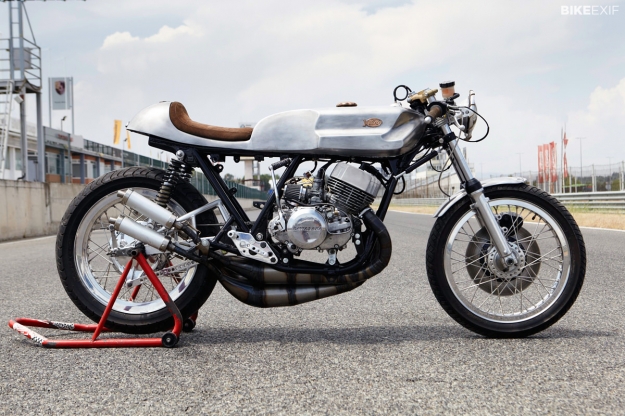
Custom Kawasaki 2-stroke motorcycle by Valtoron
Kawasaki H1 by Valtoron Kawasaki’s 498cc, triple-cylinder H1 was one of the first two-strokes to earn the ‘widow maker’ title. This one, a ’74 model dubbed La Bomba, was built by Spanish foundry Valtoron. The H1 was powerful enough in stock form, but it’s been boosted further with Wiseco high compression pistons, and reworked ports and expansion chamber—the result is 70 horses at the rear wheel.

Valtoron also braced and reinforced the H1’s notoriously wobbly frame, dropped the front end and upgraded the rear shocks to Koni items, connected to a Kawasaki GPz550 swingarm. All the bodywork was cast from recycled aluminum, finished with some bronze bits and a leather saddle. The headlight’s particularly quirky—it’s a Zundapp unit, ‘floating’ in a custom bracket. [More about this bike]

Photo by Kristina Fender.

Customized SWM 320TL 2-stroke motorcycle
SWM 320TL Trials Lorenzo Buratti wanted a bike for his 17-year-old daughter to learn to ride on that could double-up as a bike for ambling through the woods. So he refurbished this old SWM 320TL—an Italian-made motorcycle powered by a reliable 280cc Rotax engine. Buratti kept things simple – mounting the tank from an old Motobecane enduro bike and electing not to paint the engine or frame. (“I like the idea of a bike that carries signs of the times.”)

He polished the forks and painted the exhaust though, and trimmed and fitted a Kawasaki Z900 rear fender. The air filter’s protected by a tomato can, and most of the bike’s other parts were found at various swap meets. It’s a bike that didn’t cost Buratti much, or take him too long to build, but hits the mark with an effortless vintage charm. [More about this bike]

Custom Suzuki 2-stroke motorcycle by Motohangar
Suzuki GT550 “Honduki” by MotoHangar This ’75 GT550-powered custom from MotoHangar in Virginia is mental—and downright desirable. It’s a bit of a parts-bin special, but in the best way possible. The subframe is custom, the tail unit is from a Kawasaki GPZ and the expansion chambers are from a Kawasaki H1. There’s also a Honda headlight, a Suzuki SV650 swingarm and GSX-R forks and wheels. Naturally the air-cooled triple’s been bored out as well—to .50 over. Completed entirely in-house, including the paint and graphics, it’s straight out of the left field—but should make for an explosive ride. [More about this bike]

Custom Ossa 2-stroke motorcycle by Cafe Racer Dreams
Ossa Copa ‘Grand Prix’ by CRD Café Racer Dreams keep popping up in our Top 5s. It’s understandable though—the Spanish garage has a cohesive and pared-back style that’s hard to ignore. This classically-styled 1979 Ossa Copa 250 proves just how versatile they are. The Copa is a lightweight single known for it’s unusually low mixture ratio—3.5% as opposed to Ossa’s usual 5%.

CRD rebuilt the motor, fitting a Mikuni 38 carb and a hand-made exhaust system. They also strengthened the frame, upgraded the forks and replaced the stock five-spoke wheels with 18” aluminum items. A race replica tank’s been fitted, paired with a Yamaha tail piece and custom seat, and finished in an eye-catching green and white scheme. [More about this bike]

Photo by Kristina Fender.

Custom Yamaha RD350 2-stroke motorcycle
Yamaha RD350 by Analog A round-up of custom two-strokes wouldn’t be complete without a Yamaha RD350. This 1973-model was bought as an incomplete café-racer project, which sat around for a few years before its owner took it to Tony Prust of Analog Motorcycles to finish the work.

The biggest change Prust made was cutting the neck tube off so that he could graft on a Ducati S2R front end. For the wheels, he laced the original RD rear rim to the front hub, choosing a Yamaha TZ250 GP rim and hub at the rear, and replaced the stock rear drum brake with a disc.

Brembo rotors and calipers have been fitted all round—both linked to the right foot lever. The bars are super-clean, thanks to an internal throttle system and the lack of a front brake lever. A hydraulic clutch has been installed too, and the engine’s been treated to DG expansion chambers and Uni pod filters. The frame has been de-tabbed, and a custom leather and Alcantara seat fitted.

Kiel Sawusch of Crown Auto Body was responsible for the paint—a slick black and white scheme that reinforces just how clean and tight this build is. [More about this bike]

Photo by Timothy Prust.

Top 5 Kawasaki Z1 and Z1000 customs

Top 5 Kawasaki Z1 and Z1000 custom motorcycles
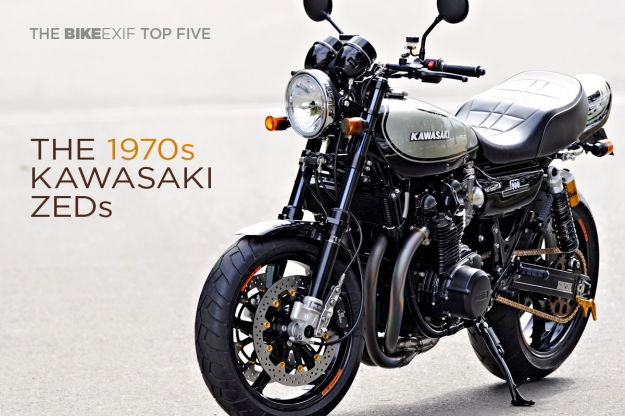
In the early 1970s, two Japanese superbikes ruled the roost: the Honda CB750 and the Kawasaki Z1. The Z1 was originally going to be a 750, but when Kawasaki got wind of the CB750 in the late 60s, they decided to up the ante by increasing capacity to 903cc.

It was a wise move. On its launch in 1972, the Z1 wowed journalists with its 82 bhp output and 130 mph top speed. It was smooth and stylish as well as powerful, and buyers loved it. Upgrades ensued: In 1976 the Z1 was replaced by the Z900, and a year later, the Z1000.

Later models didn’t quite have the charisma of the 1970s Zeds, so we’ve stuck with the early models for this Top 5. A little digging reveals some very tasty café racers—and builders on a quest for even more explosive performance.

Kawasaki Z1 customized by Bulldock of Japan
Bull Dock x Nitron Z1 There’s a whole subculture in Japan devoted to resto-modding Z1s. AC Sanctuary is the most prolific workshop, but we love this effort from Bull Dock. By Japanese standards it’s a subtle bike, with low-key paint in the brand colors of the British suspension specialist Nitron.

The build follows the typical Eastern recipe: a reinforced frame, a motor bored out to 1015cc, Keihin FCR carbs, a trick exhaust and completely new suspension and wheels. Get the full specs here.

Kawasaki Z1 customized by Racefit
Racefit Z1 The English firm Racefit is well known for its exquisite race exhaust tubing, but owners Jon Keeling and Phil Atkinson are dab hands at building custom motorcycles too. This one has a big-tube Spondon frame, hooked up to 50mm Marzocchi forks and WP shocks.

Wiseco pistons, Kent cams and Mikuni carbs ramp up the power output, and the wheels are lightweight Dymag items. The candy paint, from House of Kolors, is even better than you’d find in Tokyo: it’s the perfect evolution of the classic ‘root beer’ scheme.

Photography by Paul Bryant of Kinetic Images.

kawasaki-z1000-wrenchmonkees
Wrenchmonkees #36 If you check out the portfolio of Scandinavia’s top custom shop, you’ll notice it’s crammed with Kawasakis. Builders Per and Nicholas have a taste for retro Japanese superbikes, but not the gaudy, blinged-out resto-mods you’d find in Japan. This Z1000 is typical: stripped back, hotted up, and finished with a monochrome paint job. The motor has been rebuilt with a Wiseco big bore kit, and the swingarm, forks, wheels and brakes are from a later-model Suzuki sportbike. Low, fast and just about perfect.

Kawasaki Z1000 cafe racer by Spirit of the Seventies
Spirit of the Seventies #5 Commissioned builds are often compromises, but not this 1979-spec Z1000 from one of England’s finest workshops. “Our plan was to improve the looks without removing any ‘Big Zed-ness,’ says SOTS’s Tim Rogers, “and also improve the performance—bringing it up to modern standards of going, stopping and turning.”

That meant a rebore out to a whopping 1105cc, polished cylinder heads and Zircotec-coated exhaust headers. Keeping the show on the road are Triumph Daytona forks up front and a beefier rear wheel, housed in a customized Zephyr 1100 swingarm.

Kawasaki Z1000 customized by Kurumazaka Motorcycles of Japan
Kurumazaka Rickman Z1000 Kawasaki got ‘the look’ exactly right when designing the Zeds, so you rarely see radical makeovers or fairings. But this machine is not strictly a factory bike. It’s a Rickman special that had fallen into disrepair and has been painstakingly rebuilt by the obscure Japanese shop Kurumazaka. The classic nickel-plated frame has been tweaked to ensure that its looks finally match its performance, and the fairing and tank cover have been re-mounted with new brackets to improve the lines of the bike.

The mechanicals have been refreshed or overhauled, with discreet additions such as new switchgear and LED lighting. And the new paint job? Pure gold, don’t you think?

Image © Street-Ride magazine, Japan.

Top image: AC Sanctuary’s RCM-283 Z1. Last week’s Top 5 covered the best Modern Motorcycles for customizing.

Top 5 Modern Motorcycles Part II

Top 5 New Motorcycles, Part II

Last week we showcased five modern motorcycles that hit the mark in terms of attitude and style. It was a mix of retro re-issues and well-designed modern machines, and struck a chord with many readers.

All of the featured bikes had one thing in common—they looked great in both stock and custom form. But we quickly realized that five wasn’t nearly enough, so we’ve decided to revisit our selection.

Here are another five showroom bikes that we’d love to take home, ride, show off to our friends and customize. Let us know which one grabs your attention the most—unless of course you’re still stuck on the original list.

2014 Triumph Speed Triple
Triumph Speed Triple I’ve been a fan of the Speed Triple ever since Tom Cruise’s famous Mission Impossible II chase scene. Triumph’s iconic naked hooligan bike has seen some technical and styling changes over the years, but it’s still a very relevant motorcycle.

The key ingredients are all present: a brilliant 1050cc three-cylinder engine, unapologetic styling and headlights that look like they were unceremoniously ripped from a sport bike fairing. There’s also ABS braking to keep you in check.

It’s a bike I’d happily park in my garage, but more importantly it’s a bike that I’d like to see more custom shops tear into. Almost $2,000 more gets you the R-model, with Öhlins suspension, Brembo brakes and a smattering of bolt-on accessories.

At a glance: $12,799, 135hp, 111Nm, 214kg (curb weight) What we’d do: Hit up LSL for some parts and ride it daily. Or we’d send it to: Spirit Of The Seventies in England. They’ve already teased us with Speed triple concepts, and we’d love to see them build one.

Triumph Speed Triple concept by Spirit Of The Seventies

Yamaha XJR1300 Yamaha have really been swinging for the fences with their Yard Built program. Last week we showed off the SR400, this time we’re on the other end of the spectrum with the four-cylinder, 1,251cc XJR1300. It’s the epitome of Japanese muscle – a nod to the past with up-to-date tech that includes Öhlins shocks and monobloc four-piston brake calipers. There’s even a four-into-one exhaust system with an EXUP muffler to add the appropriate soundtrack.

Yamaha wasted no time in farming it out to the Wrenchmonkees and Deus Ex Machina Italy. The resulting customs were inspired and ultra-desirable, and off-the-shelf custom parts from both shops are now available.

2013 Yamaha XJR1300

At a glance: 71.9kW, 108.4Nm, 245kg (curb weight) What we’d do: Order in some parts from Deus Ex Machina Italy and put together our own Project X replica. Or we’d send it to: Japanese muscle-bike specialists AC Sanctuary. Or the Wrenchmonkees, for a replica of the mighty Monkeefist (below).

Yamaha XJR1300 custom motorcycle by the Wrenchmonkees

Harley-Davidson Sportster 1200 Forty-Eight I’ve never been big on Harley-Davidsons myself, but even I can’t deny the Sportster’s popularity among builders. I’ve seen Sporties utilized for everything from flat trackers to café-racers, and a good few of them have stopped me dead in my tracks. Plus there’s the torque and the distinctive ‘growl’ from that V-twin mill.

There are currently six models in the Sportster line, but we’ve settled on the 1200 Forty-Eight (below). Right off the bat it has a brawny feel to it, with a raised peanut tank, solo seat, tiny headlight and blacked-out engine casings. If your budget doesn’t stretch that far, the smaller-capacity Iron 883 would be a solid second choice, and you could always give it a performance boost at a later stage.

2014 Harley-Davidson Sportster Forty Eight
At a glance: Priced from $10,749, 67hp, 96Nm What we’d do: Move the foot controls back to where they belong, and sprinkle some Biltwell parts on it. Or we’d send it to: Roland Sands for a flat-tracker makeover (below).

Harley Sportster tracker custom motorcycle by Roland Sands
Yamaha XV950 / Star Bolt Normally we wouldn’t include two bikes from the same manufacturer, but since the XV950 is sold in the USA under the Star brand as the Bolt, we’ll give ourselves a free pass. Besides, we can’t help but love the Bolt’s bare-bones vibe, aptly described by Yamaha as a ‘neo retro Japanese look’—even if the exhaust is a little gaudy.

Yamaha’s interest in the new-wave custom scene is also refreshing: last year they ran the Bolt Custom Build-Off, where they shipped Bolts to ten builders and asked the public to select a winner. The results were intriguing, with top work coming from the likes of Roland Sands, Chappell Customs, Burly Brand, Jeff Palhegyi and Greg Hageman, who took top honors.

2015 Yamaha Star Bolt
At a glance: $7,990, 45hp, 68Nm, 540lb (curb weight) What we’d do: Keep it bobbed, and ask Chappell Customs to send us the bolt-on, mono-shock subframe that they used on their Build-Off entry. Or we’d send it to: Greg Hageman. His competition-winning bike (below) was sublime, and we’d love to see what he’d do second time around.

Yamaha Star Bolt custom motorcycle by Greg Hageman
Kawasaki W800 Special Edition We really should have included the Kawasaki W800 in our first Modern Motorcycles round up. It’s easily one of the nicest neo-classics currently on the market, exuding tons of British charm despite being manufactured in Japan. Its predecessor, the W650, was in production from 1999—two years before Triumph launched their new Bonneville.

After a short hiatus from 2008 to 2011, the W800 was released with a displacement jump to 773cc and fuel injection. It’s an easy going motorcycle thanks to its parallel-twin mill, but what’s really great about it is how much attention Kawasaki have paid to small details—such as the pairing of an 18” rear wheel with a 19” front wheel for a more balanced stance.

The current Special Edition’s predominantly black paint scheme (below) is a winner, and both it and the regular model are available in ‘Café Style’ versions, with a solo seat and a small bikini fairing. And if it seems like I’m waxing lyrical about the W, I will admit that I’m biased—I own a W650 and love it.

Kawasaki W800 Special Edition
At a glance: €8,569, 35Kw, 60Nm, 217kg (curb weight) What we’d do: Turn it into a vintage trials-inspired scrambler, like James Whitham’s gorgeous W650 tracker. Or we’d send it to: LSL, for a Clubman-style W800 special (below).

LSL Clubman Kawasaki W800

Header image: Low and Mean’s Star Bolt. Read last week’s Top 5 Modern Motorcycles here.

Top 5 Modern Motorcycles

Top 5 new motorcycles

It’s a widely held opinion that contemporary motorcycle design isn’t quite what it used to be. The sense of nostalgia that fuels the custom scene is often associated with the belief that motorcycling’s golden age preceded 1980. Bikes looked better, had more class and were built simpler, devoid of modern amenities such as fuel injection and ABS braking.

But owning a vintage motorcycle isn’t everyone’s cup of tea. By modern standards, older bikes have poor brakes, soft suspension and require more maintenance—and not everyone has the skill or patience to address these issues.

Thankfully, there are some manufacturers who still produce beautiful motorcycles—whether they are neo-classics, or modern designs that evoke emotion. Even better, major brands have begun to recognize the custom scene as a legitimate market, and have started supporting it.

So here are five modern motorcycles that we love. These are bikes that look great right off the showroom floor, but also have tons of potential as bases for custom projects. Let us know if we’ve piqued your interest with our selection. Which one of these lookers would you choose?

The new BMW R nineT
BMW R nineT BMW put smiles on the faces of many motorcyclists when they launched the R nineT. A nod to the venerable 90-year-old boxer, it also signaled BMW’s recognition of the burgeoning custom scene. Ola Stenegärd and his team even involved four of the world’s foremost builders in the launch, giving each an R nineT to customize as they saw fit. The bike itself encourages personalization: the rear part of the subframe is removable to allow for multiple seat configurations, and BMW have already released an array of bolt-on parts.

At a glance: $14,900, 110hp, 119Nm, 489lbs (curb weight) What we’d do: Fiddle with the subframe until we’ve figured out what we like most. Or we’d send it to: Roland Sands, with a note attached reading, “The Concept 90 (below) was great—how about a repeat performance?”

Roland Sands x BMW Concept 90 custom motorcycle

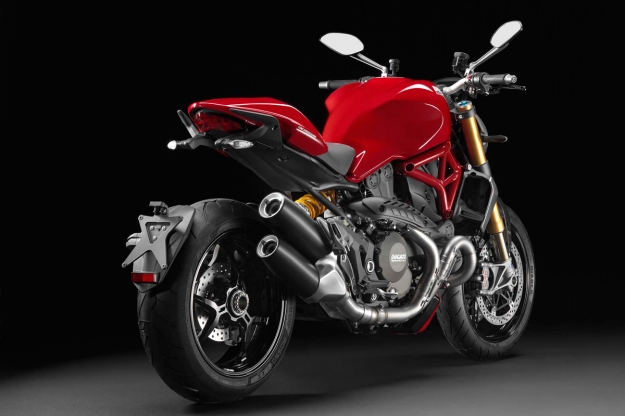
Ducati Monster 1200S Miguel Angel Galluzzi’s original Monster design remains iconic to this day. And, while it’s evolved over the last eleven years to adopt more radical and aggressive styling, its original DNA is still present in the current Monster model line. The sport-bike tail, hunched tank and trellis frame are all there to remind us of its parts bin origins. At the top of the current range is the Monster 1200S, boosted to a whopping 145hp by Ducati’s Performance Package, and equipped with Brembo brakes, Öhlins suspension and a discreet styling touches to set it apart from the regular Monster 1200.

Ducati Monster 1200S
At a glance: $15,995, 145hp, 124.5Nm, 461lb (curb weight) What we’d do: Nothing more than a few trick bits from Rizoma to tidy it up. Or we’d send it to: Radical Ducati, if they were still around, given their record with custom Monsters like the one below.

Ducati Monster customized by Radical Ducati
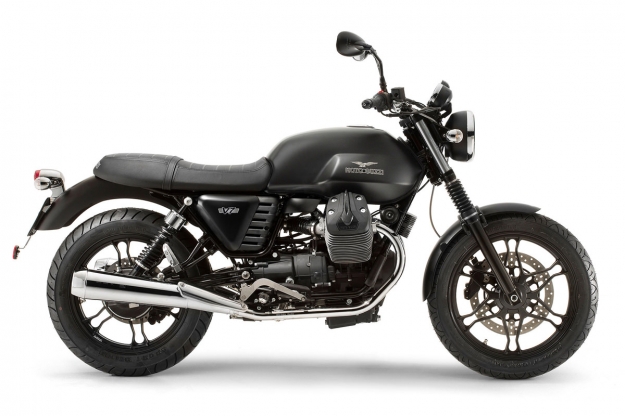
Moto Guzzi V7 Stone Outside Europe, Moto Guzzi’s V7 seems to fly under the radar. But we think it’s a great bike (our editor rides one and digs it). It’s a sweet-handling motorcycle with retro styling that has almost single-handedly revitalized the fortunes of the Moto Guzzi brand. The V7 Stone is the cheapest and most understated of the range; available in only plain black or white, with no graphics other than Guzzi logos, it’s the polar opposite of the higher-end, chrome-tanked V7 Racer. Which is exactly why we love it. It’s the perfect blank canvas for customization, while still being incredibly classy in stock trim.

Moto Guzzi V7 Stone
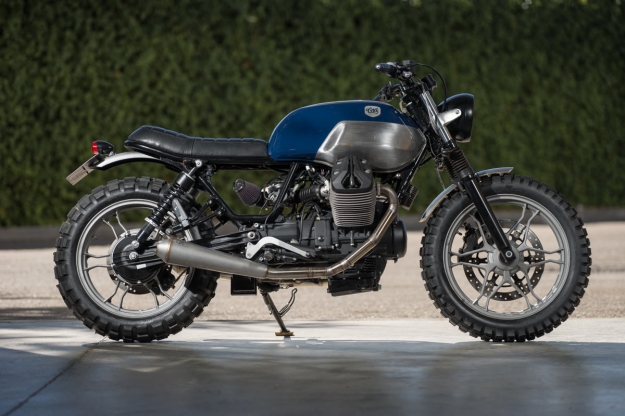
At a glance: $8,490, 50hp, 58Nm, 395lbs (curb weight) What we’d do: In Europe, we’d turn it into a subtle street scrambler, Cafe Racer Dreams style (below), or send it to Officine Rossopuro. In the USA, we’d entrust the job to Revival Cycles.

Moto Guzzi V7 customized by CRD
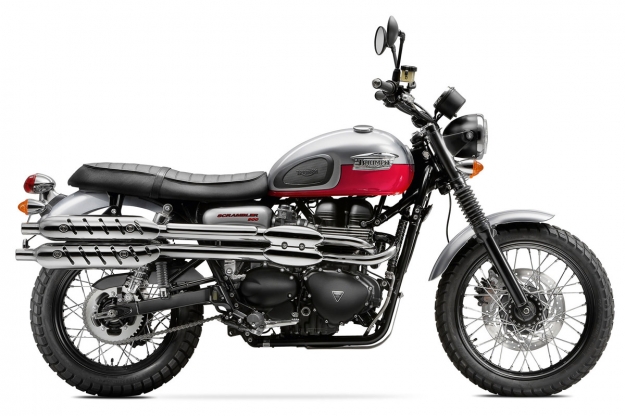
Triumph Scrambler It would be silly of us not to include one of Triumph’s ubiquitous modern classics in this line-up. Alongside the Bonneville and Thruxton, the Scrambler has enjoyed consistent popularity since it launched, thanks to its desert sled styling and pseudo-McQueen heritage. Owners looking for off-the-shelf parts to personalize their Hinckley Triumphs can choose from Triumph’s own extensive aftermarket catalogue, or from a growing list of third party Triumph specialists. Many Scrambler owners are just happy to stick on some knobbly tires and call it a day, though.

Triumph Scrambler
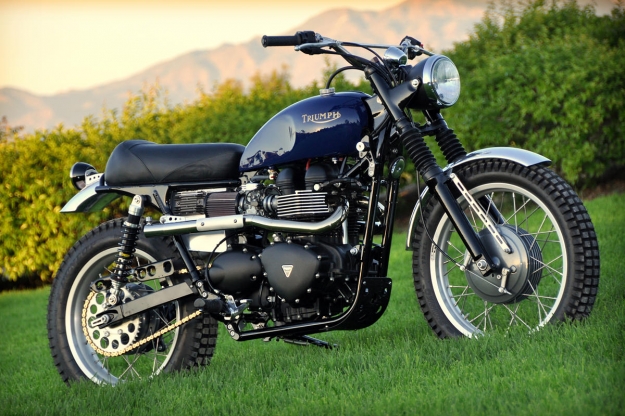
At a glance: $9,099, 59hp, 68Nm, 472lbs (curb weight) What we’d do: Raid the Dime City Cycles or British Customs online stores. Or we’d send it to: Mule Motorcycles for a retro custom job like the ‘Catalina‘ (below).

Triumph Scrambler customized by Mule Motorcycles
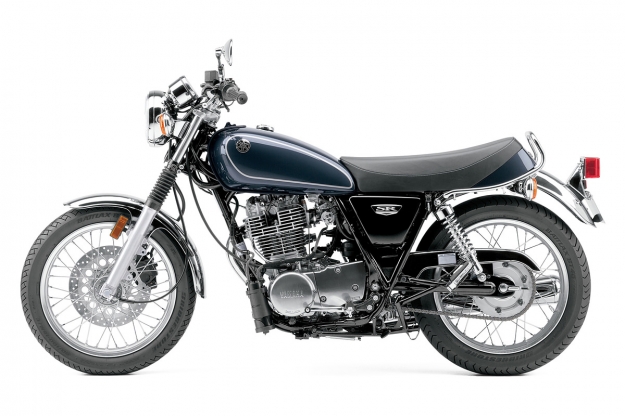
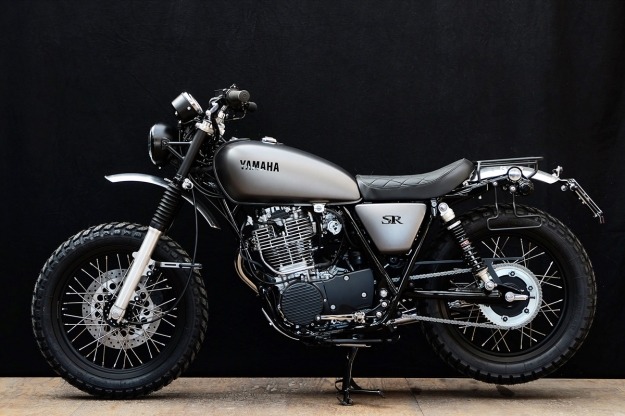
Yamaha SR400 As much as we love its unpretentious ’70s styling, the SR400 is a bike we’d buy just to tear into. Sure, it’s a 35-year-old cult classic (that still has a kick starter), but it’s just begging to be personalized. Yamaha themselves pitch it as a great base for custom projects—including it in their awesome Yard Built program. The fact that it’s affordable and has a simple, air-cooled, single cylinder motor doesn’t hurt either.

The new Yamaha SR400
At a glance: $5,900, 23hp, 27.4Nm, 384lb (curb weight) What we’d do: Grab some Wrenchmonkees parts from the German KEDO store to build our own Gibbonslap (below). Or we’d send it to: Japanese master Go Takamine for a dash of Brat Style.

Motorcycle specs are manufacturers’ figures. Last week’s Top 5 covered the best Concept Motorcycles.

New Yamaha SR400 customized by Wrenchmonkees